Dappu dance: From custom to effulgence, A metrical resonance woven in Caprine leather
Andhra Pradesh is distinguished and acclaimed for the wide presence and practice of a myriad of folk dance forms that have captivated and enchanted the diligent and zealous audience. Dappu nruthyam or Dappu is one among them. This dance is displayed and staged with a lone percussion instrument namely Dappu or drum.This authenticated dance is the confirmation of the fact that for experiencing the beauty and charm of relishing and cherishing the dance and music you need not have the accompaniment and escort of sophisticated orchestration or dazzling and mesmerizing performance.
This dance form is venerably welcomed and bountifully harboured by Andhra Pradesh and Telangana. It’s needless to say that it has got a significant historical relevance too. Traditionally this art form has been very reveredly performed by the communities Of Andhra Pradesh like Mala and Madiga.
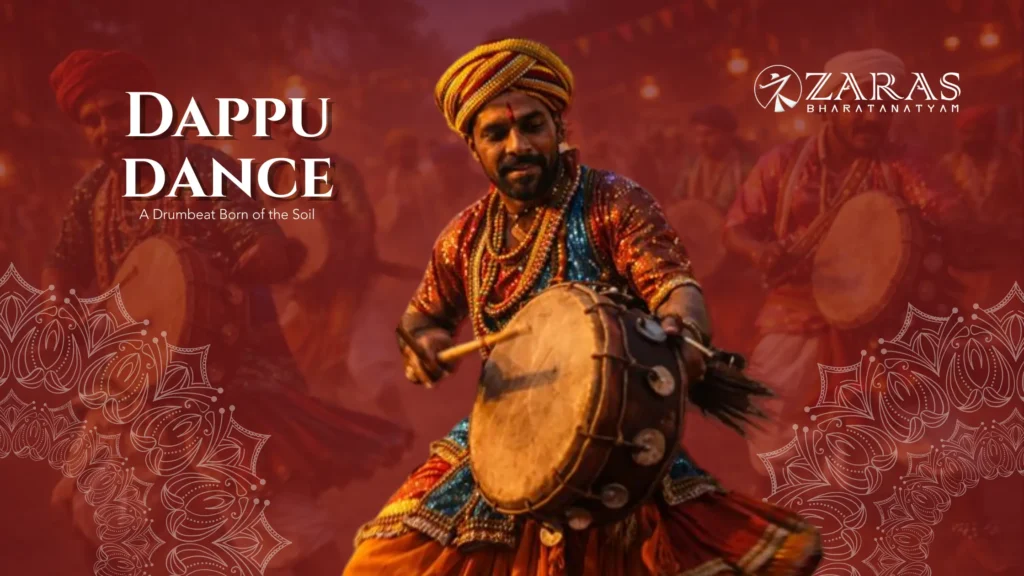
The term ‘Dappu’ is derived from the percussion instrument devised rhythmically to accelerate the agile and frenzied movements of the dancers of Dappu. Dappu is a tambourine like device skillfully processed from buffalo, cow or goat skin. It is frantically, adroitly and adeptly beaten with two thin sticks. This rhythm is mellowed, aggrandized and ennobled by the delicate and subtle jingling of the ankle bells of the dancers ranging from 16 – 20, who float, flow and intermittently pause elegantly.
Customarily it’s performed by male artists who are clad in ostentatiously glittering flashy attire consisting of turban, dhotis and entrancing make up. This high octane, dazzling and vibrant percussion rendering pioneer sequences like festivals, marriages and religious events stringing and intertwining mythology, music and communal celebration into a harmonious chord. Dappu drum steers the performance pattern shifting fluidly from gradual, nimble and astute dance flow representing tiger, bird, or horse movements. Amplifying from plodding pace to an unabated, rapid and frantic denouement.
The escorting rhythmic companions include, tabla,cymbals and harmonium engendering and delineating the kaleidoscopic nuances of mythological crux and at times even lampooning lyrics. The dancers stylishly float and flow on the stage in circles and straight and forward on the road respectively,along with musical interludes casting rapturous and dazzling spells on the viewers.
The taal or the rhythm is not random, free or unpremeditated but follow a rigid regimental musical layout. Five main fashions are strung in dappu dance as per the movement norm.
Majili dappu holds the central stage during dussera, The Aata dappu featuring dual steps staged during the weddings, Holi dappu with tri step pattern occupying the limelight during the Holi festival, pochamma dappu comprising of qudra steps executed in devoutness of Goddess Pochamma and rolattam dappu with its penta steps are performed during normal festivals.
Dappu dance bears an unquestionable testimony of the cultural paradigm of Telangana society. It’s not a mere means, method and source of entertainment and recreation but a vital reservoir, an indelible and unforgettable ever focusing icon of their essential societal brand.